
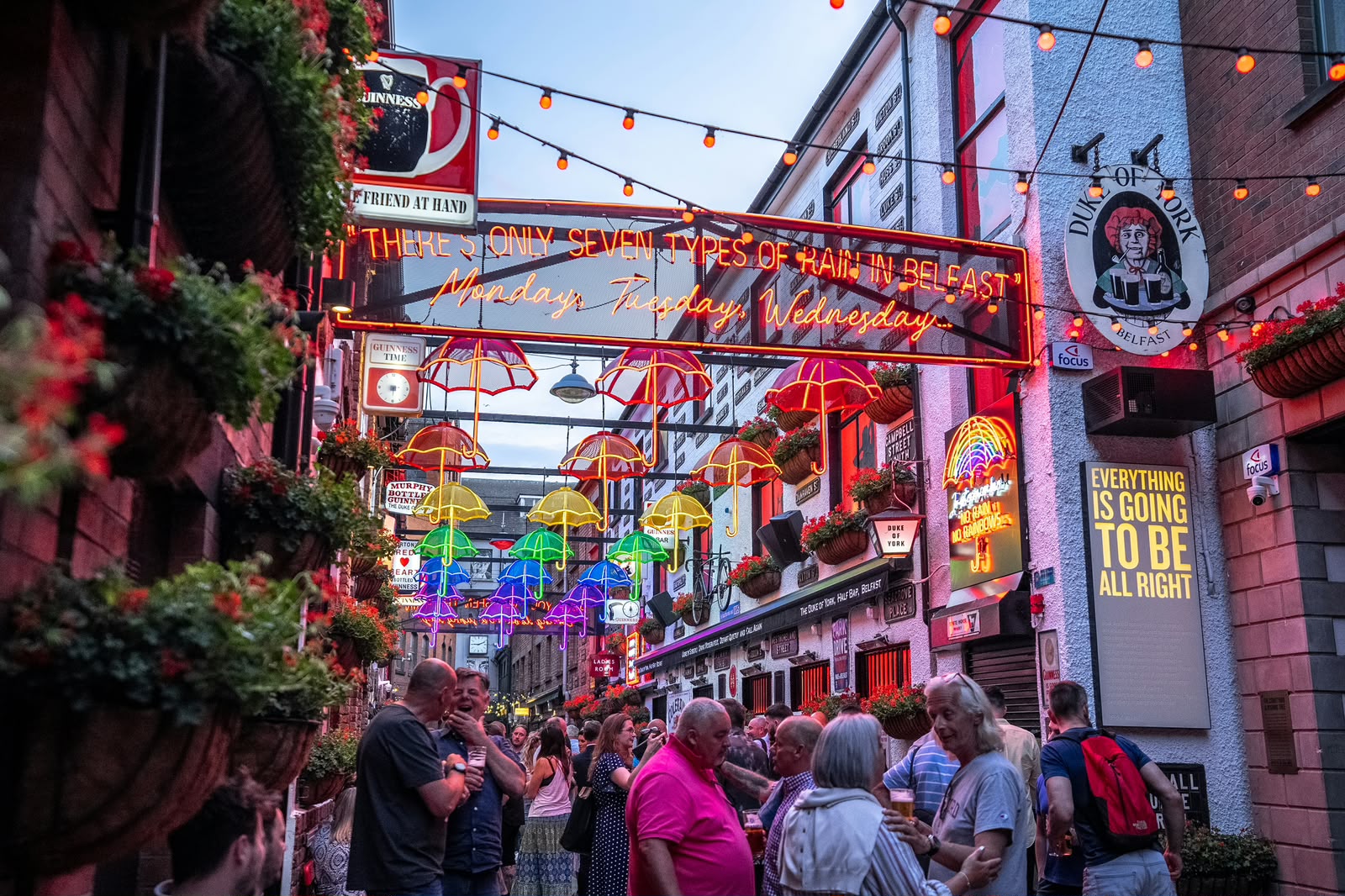

Northern Ireland has never been a place of singular identities. Britishness and Irishness have long existed alongside one another, sometimes in tension, but also through shared experiences, relationships and cultural traditions. Increasingly, however, our society is becoming more complex and the identities of those who call Northern Ireland home cannot be neatly categorised along traditional political or cultural lines.
This presents us with an opportunity. Rather than seeing identity as something to be contested, we should recognise the diversity of our traditions as one of Northern Ireland’s strengths.
Our constitutional settlement provides the framework to do this. The Belfast (Good Friday) Agreement recognised the right of people born in Northern Ireland to be British, Irish or both. But the principle behind that settlement is more important still: different identities can coexist without one having to triumph over another.
Northern Ireland should aspire to be a place where people feel confident in who they are while respecting the right of their neighbours to feel differently.
Celebrating British and Irish identity
For many people, British identity finds expression through traditions passed down through generations. Orange parades, Eleventh Night bonfires and the community events surrounding the Twelfth of July remain important parts of our cultural calendar.
While controversy surrounding a minority of events can dominate public discussion, the vast majority of Orange parades and associated celebrations are peaceful, family-oriented occasions that bring communities together. Marching bands, local festivities and family events provide positive expressions of British and unionist culture.
Equally, Northern Ireland provides space for the flourishing of Irish identity, language, music, sport and culture.
The success of Fleadh Cheoil na hÉireann in Belfast demonstrated the vibrancy and appeal of traditional Irish culture. More broadly, Irishness is expressed throughout Northern Ireland through Gaelic games, traditional music, the Irish language, education and a rich network of cultural organisations.
None of this is incompatible with Northern Ireland’s constitutional position. Indeed, one of the strengths of the current settlement is that someone can live here, consider themselves thoroughly Irish and have that identity recognised and protected.
Britishness and Irishness should therefore not be regarded as competing identities where the advancement of one inevitably comes at the expense of the other. Both belong here.
Each of our traditions should be recognised and celebrated, taking place in a spirit of mutual respect and consideration for those who may not share them.
A more plural Northern Ireland
Yet Northern Ireland is no longer adequately described solely through these two traditions.
More people are identifying as neither and Northern Irish identity has developed as another important expression of belonging. The 2025 Northern Ireland Life & Times Survey found that 77% of respondents felt a sense of belonging to Northern Ireland, including majorities of Protestants, Catholics and people of no religion.
Immigration has added further layers to this picture. People from Italian and Chinese communities to those from Commonwealth countries and beyond form part of a modern Northern Ireland. Events such as the Belfast Mela, with its celebration of international music, food, dance and culture, demonstrate the contribution that newer communities make to our increasingly plural society.
Their contribution goes well beyond culture. People who have made Northern Ireland their home from elsewhere work in our health and social care services, establish businesses, create jobs and contribute to the wider economy. They are not simply newcomers to Northern Ireland. They are part of its story.
Our understanding of belonging must reflect that reality.
A shared home
For too long, discussions about identity in Northern Ireland have been framed as a choice between competing alternatives. Yet identity does not have to work like that.
People can be British, Irish, Northern Irish, combinations of these identities or something else entirely. What connects us is not the requirement to become the same, but the fact that we share this place and have a common interest in making it succeed.
Northern Ireland’s place within the United Kingdom, itself a multi-national state composed of four distinct parts, provides a framework capable of accommodating that complexity. But institutions alone cannot create a shared society. That also requires generosity about the identities of others and the confidence to celebrate our own without believing somebody else’s diminishes it.
Our ambition should therefore be straightforward: a Northern Ireland where Britishness can flourish, Irishness can flourish and newer identities can put down roots; where difference is respected rather than feared; and where everyone who calls this place home can feel that they belong.
That pluralism need not be a weakness to manage. It can be one of Northern Ireland’s greatest strengths.